
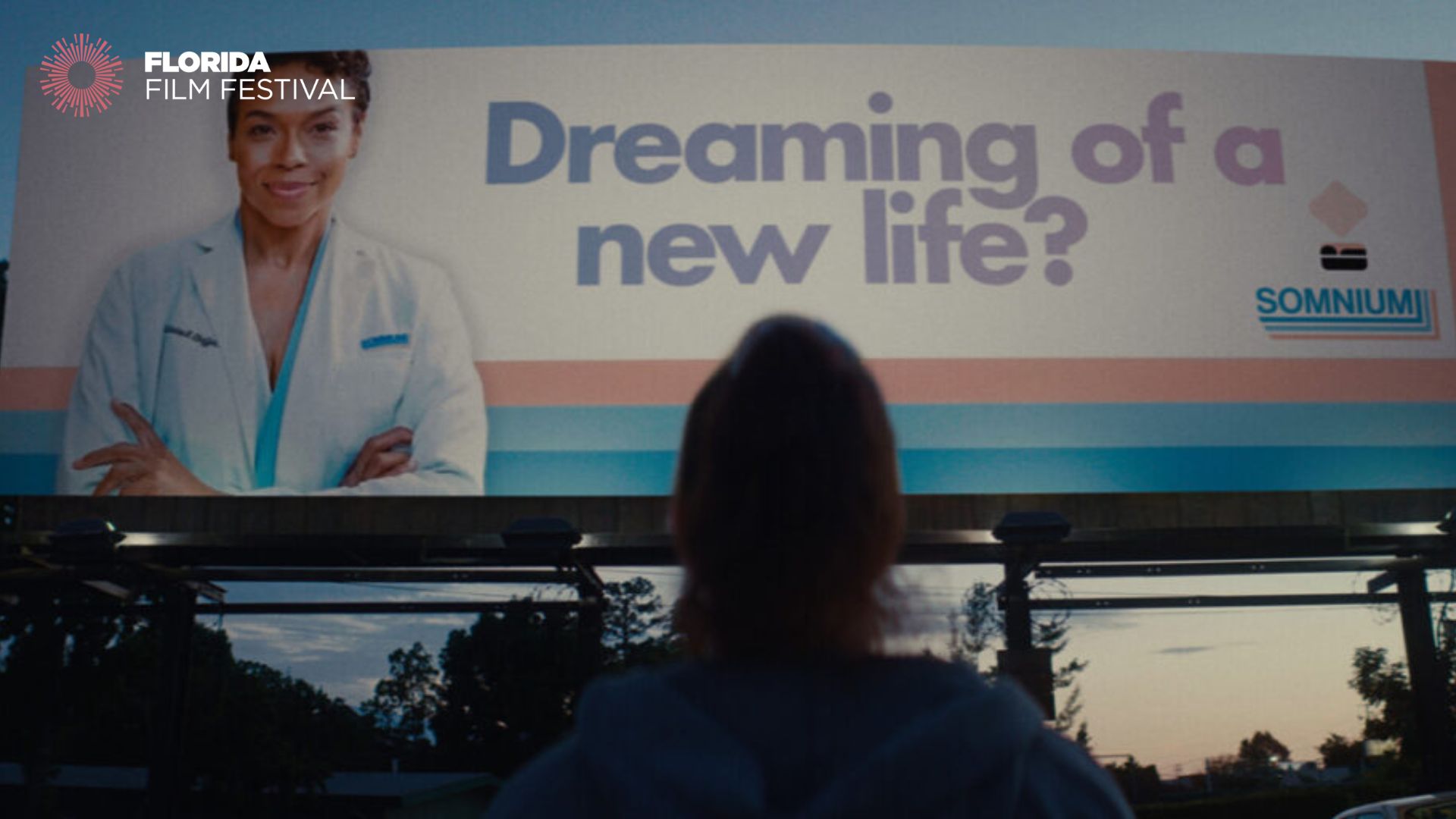
For writer-director Rachael Cain, Somium is deeply personal. Cain passionately pours her experiences into this feature debut, crafting a film that’s deeply introspective and intriguing, anchored by a tremendous performance from Chloë Levine. Levine is captivating and full of life, her face filling countless close-ups that demand your empathy and attention, effortlessly carrying the emotional weight and genre flair of the film.
The story follows Gemma (Levine), an aspiring actress who moves to Hollywood, only to find herself disheartened by endless auditions and a profound sense of isolation. Her life is interspersed with flashbacks to her Georgia upbringing and her strange new employment at the mysterious Somnium sleep clinic, where dreams become unnervingly real. For me, these surreal clinic scenes are the film’s strongest and most intriguing moments. They offer genuinely eerie and creatively unsettling glimpses of sci-fi and horror, highlighted by a brief yet unforgettable appearance of a fantastically designed practical-effects creature.

While Cain effectively balances tones between grounded drama and genre thrills, I found myself craving more of the bizarre, compellingly creepy moments set within the Somnium clinic. The film occasionally meanders through less engaging romantic subplots and emotional beats, which, though well-executed, lack the compelling pull of the film’s weirder elements.
The supporting cast, including Jonathon Schaech as a quasi-villain and Peter Vack as the hometown boyfriend, bolster the narrative well. Will Peltz, playing Noah, the sleep lab tech, also deserves a special mention for delivering an incredibly creepy and memorable performance. I only wish we’d gotten even more of him. But it’s Levine who truly shines, displaying remarkable versatility, effortlessly shifting between heart-rending vulnerability and the resilient, final-girl intensity needed in genre-driven moments.

Major kudos to composers Mike Forst and Peter Ricq, whose retro synth score amplifies the eerie, unsettling atmosphere of the film. Equal praise goes to production designer Olivia McManus and the entire art department for crafting vividly distinct environments, seamlessly blending Gemma’s dingy LA apartment, the sinister sci-fi horror of the Somnium sleep clinic, dreamy flashbacks in Georgia, and an utterly mesmerizing dark void dream space. Cinematographer Lance Kuhns also deserves recognition for giving the film incredible texture, making it feel expansive despite its modest budget. Every detail, from props to costumes, feels meticulously crafted, striking a perfect balance between retro and futuristic aesthetics.
Despite some narrative quibbles, there’s no denying Cain’s evident talent and vision. Somnium stands out at this year’s festival as a promising debut from a director who clearly has much more to offer. Personally, I hope Cain leans fully into the strange and genre-focused aspects in her future projects, as her grasp of eerie, horror-inflected storytelling is genuinely exciting.
This review is part of our ongoing coverage of the 2025 Florida Film Festival.


![Stolen Kingdom – Review [Florida Film Festival]](https://i0.wp.com/weboughtamic.net/wp-content/uploads/2025/04/8.jpg?fit=1024%2C576&ssl=1)
![The Shrouds – Review [Florida Film Festival]](https://i0.wp.com/weboughtamic.net/wp-content/uploads/2025/04/wbam-2025-5.jpg?fit=1024%2C576&ssl=1)
![www.rachaelormont.com – Review [Florida Film Festival]](https://i0.wp.com/weboughtamic.net/wp-content/uploads/2025/04/wbam-2025-4.jpg?fit=1024%2C576&ssl=1)


Leave a Reply